
 |


Share to:


70-screw double-station 2-chamber electric semi-hydraulic fully automatic blow molding machine, can produce up to 1L plastic bottles
| Quantity: | |
|---|---|
-
70 screw, 2 stations, 2 cavity
-
Buck machine
Machine Introduction
70 Screw Double Station 2-Cavity Electric Semi-Hydraulic Fully Automatic Blow Molding Machine
This model is a high-efficiency and stable fully automatic extrusion blow molding machine specially optimized for small-capacity HDPE plastic containers. Equipped with a 70mm high-precision plasticizing screw, it delivers uniform plastic melting, stable extrusion volume, and excellent material compatibility for HDPE and PP raw materials.
Adopting double-station and 2-cavity design, the machine greatly improves production efficiency compared with single-station equipment, realizing continuous and mass production of small bottles. The electric semi-hydraulic control system balances fast running speed and stable mold clamping pressure, effectively reducing machine vibration, lowering failure rate, and ensuring consistent bottle wall thickness and finished product stability.
Technical parameters
| 螺杆 screw | 70MM |
| 最大容量 Max. product volume | 1L |
外形尺寸 size | 3200*1800*2400MM |
机器重量 weight | 2.5T |
塑化能力 Plasticizing ability | 55Kg/H |
加热功率 Heating power | 10KW/H |
挤料电机 Extrusion motor | 11KW |
油泵电机 Oil pump motor | 11KW |
减速器 reducer | 146 Hardened tooth surface, high strength,low noise and anti-wear reducer |
模板尺寸 Template size | 280*270MM |
锁模力Clamping force | 200KN |
| 中心距 center distance | 140mm |
Machine Picture


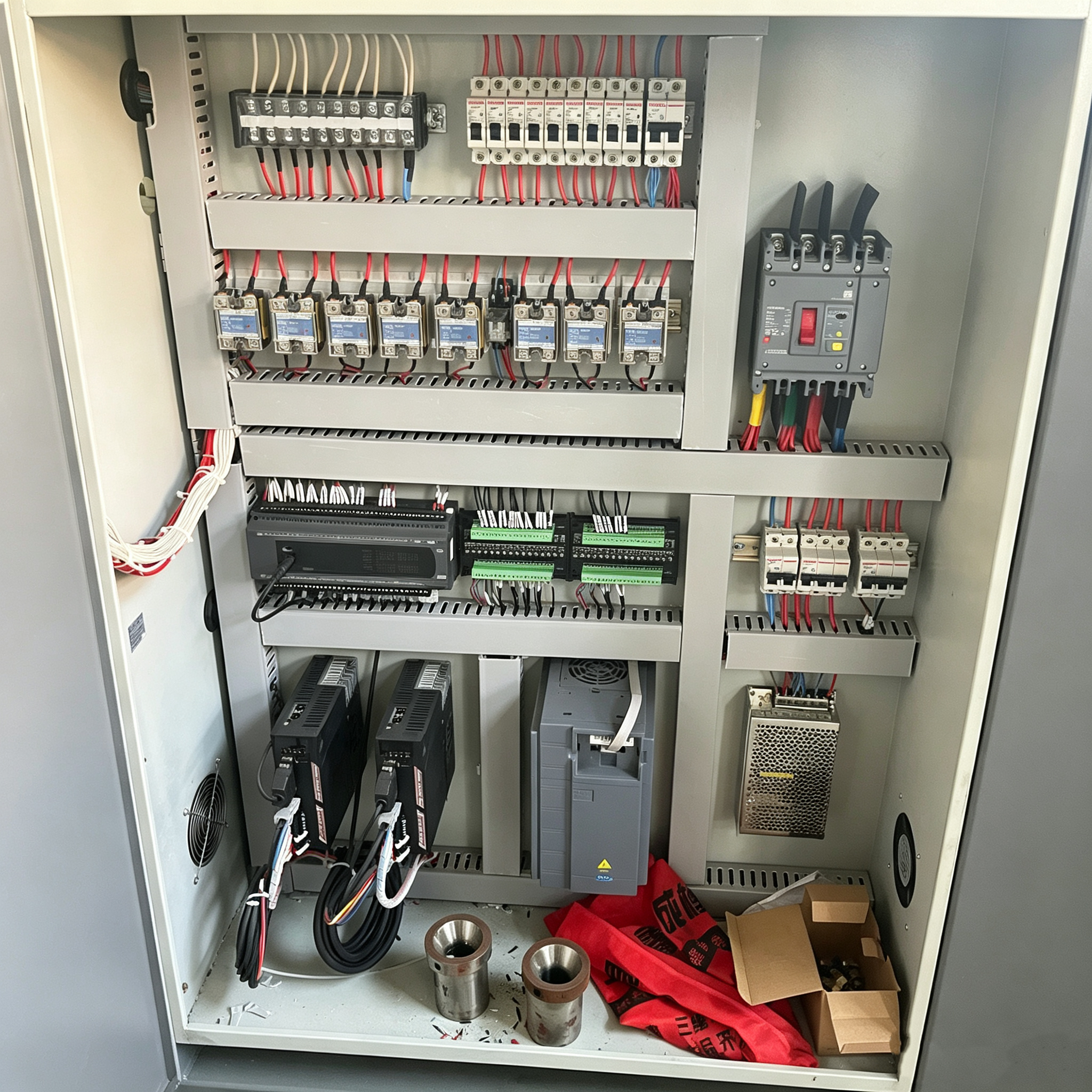
Electric box

Screw heating,
nitriding steel 38CrMoAlA
5 Cast aluminum heating coil

Mitsubishi PLC Touch Screen

Temperature controller


Key Features
1. High Production Capacity
Adopts double-station and double-cavity alternating working structure. The production efficiency is nearly doubled compared with single-station machines, supporting stable and mass production of 0.1L to 1L small plastic bottles.
2. Excellent Plasticizing Performance
Equipped with a 70mm high-precision extrusion screw. It provides uniform plastic melting, stable discharging speed and consistent parison thickness. Perfect for processing HDPE and PP raw materials with smooth bottle surface and no obvious weld lines.
3. Electric Semi-hydraulic System
Adopts electric-assisted and semi-hydraulic driving design. It features fast running speed, balanced clamping force, low vibration and high stability. Effectively reduces machine failure rate and ensures long-term continuous operation.
4. Wide Production Compatibility
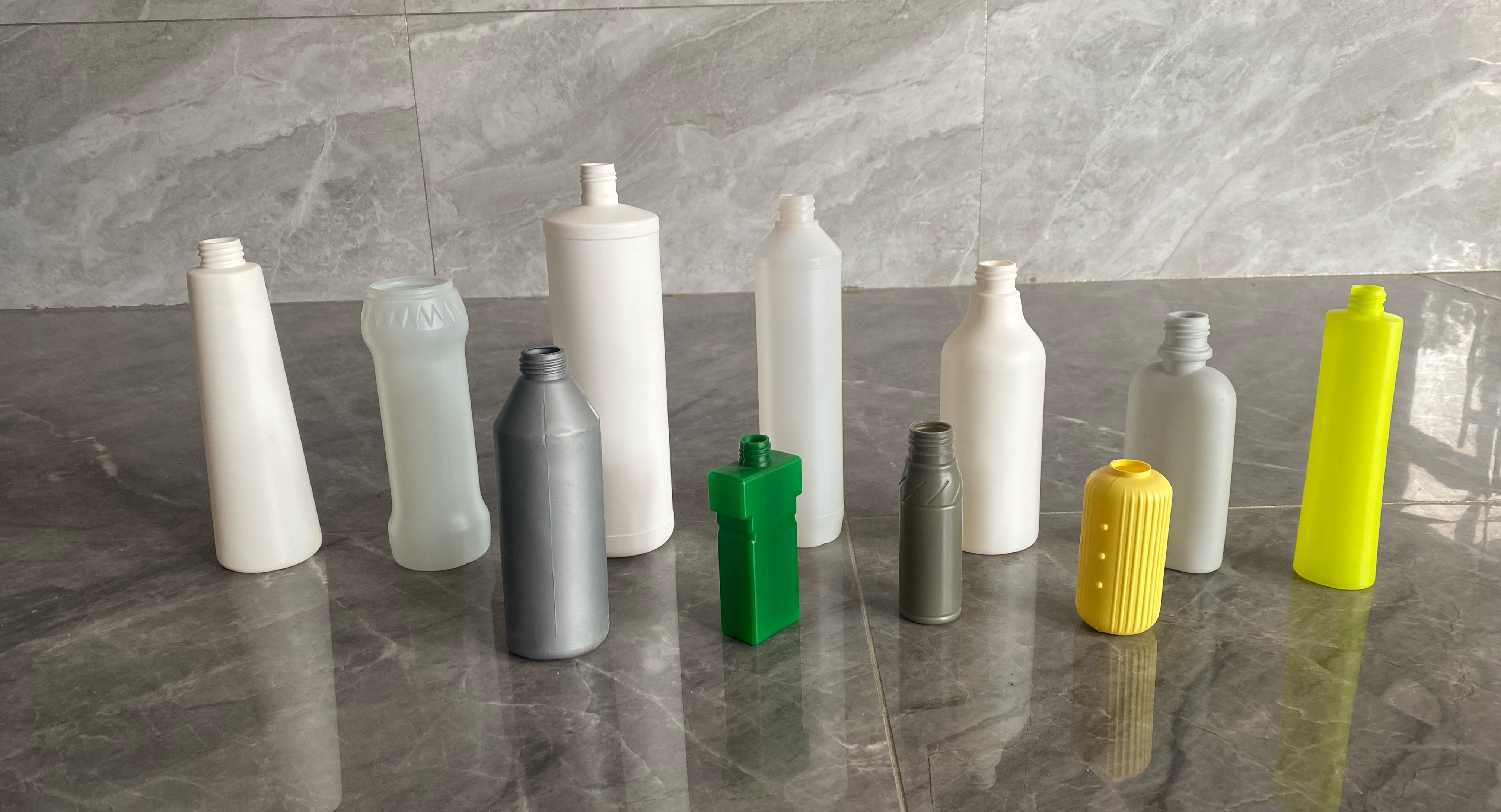
Capable of producing various small-capacity hollow containers, including round bottles, square bottles, flat bottles, irregular shaped bottles, small handle bottles, daily chemical bottles and pharmaceutical bottles. Mold replacement is simple and flexible.
5. Full Automatic Operation
Realizes automatic mold clamping, automatic blowing, automatic deflating and automatic product discharging. Only one worker is required for supervision, greatly saving labor costs and improving production automation level.
6. High Molding Precision
The machine body adopts rigid structural design with precise mold positioning. The finished bottles are full-shaped, burr-free and deformation-free, maintaining a high qualified rate.
7. Energy Saving and Cost Effective
Optimized specially for small bottle mass production. It consumes lower energy, runs stably and requires simple daily maintenance. It is an ideal cost-effective equipment for small and medium packaging factories.
Applications
Application Scope:
This 70 screw double-station fully automatic blow molding machine is specially designed for mass production of 0.1L–1L small HDPE & PP plastic bottles, widely used in various lightweight packaging industries.
1. Daily Chemical Packaging
Shampoo bottles, shower gel bottles, hand sanitizer bottles, detergent bottles, lotion bottles, cosmetic plastic containers and other daily chemical small packaging bottles.
2. Pharmaceutical & Medical Packaging
Medical liquid bottles, disinfectant bottles, alcohol bottles, medicinal syrup bottles, health product small plastic containers.
3. Food & Beverage Packaging
Seasoning bottles, sauce bottles, vinegar bottles, edible oil small bottles, beverage plastic containers and food-grade packaging bottles.
4. Chemical & Industrial Packaging
Small chemical reagent bottles, pesticide bottles, fertilizer sample bottles, lubricating oil small bottles and industrial plastic packaging containers.
5. Household & Daily Use Products
Small portable plastic cans, household storage bottles, travel-size empty bottles and daily hollow plastic containers.
The machine supports diversified bottle shapes including round, square, flat, irregular and small handle bottles, fully meeting customized packaging demands for multiple industries.
Company Information
Click here to edit your content.

Cangzhou Buck Machinery Manufacturing Co., Ltd. is a professional export-oriented company specializing in the research, development, production, and sales of fully automatic and semi-automatic electric blow molding machines.
We mainly produces a full range of efficient, energy-saving, and highly stable blow molding equipment, covering small, medium, and large models. It can manufacture plastic bottles and hollow plastic products from materials like HDPE, PP, and PET, widely used in daily chemicals, beverages, food, pharmaceuticals, industrial packaging, and household goods.
We provide global customers with one-stop services including equipment customization, mold development, on-site installation guidance, and lifetime after-sales technical support. With excellent product quality, competitive factory prices, and thoughtful foreign trade services, we have been deeply cultivating overseas markets for many years.
FAQ


